Journal article
From Aid to Trade: Pak-US Critical Minerals Partnership
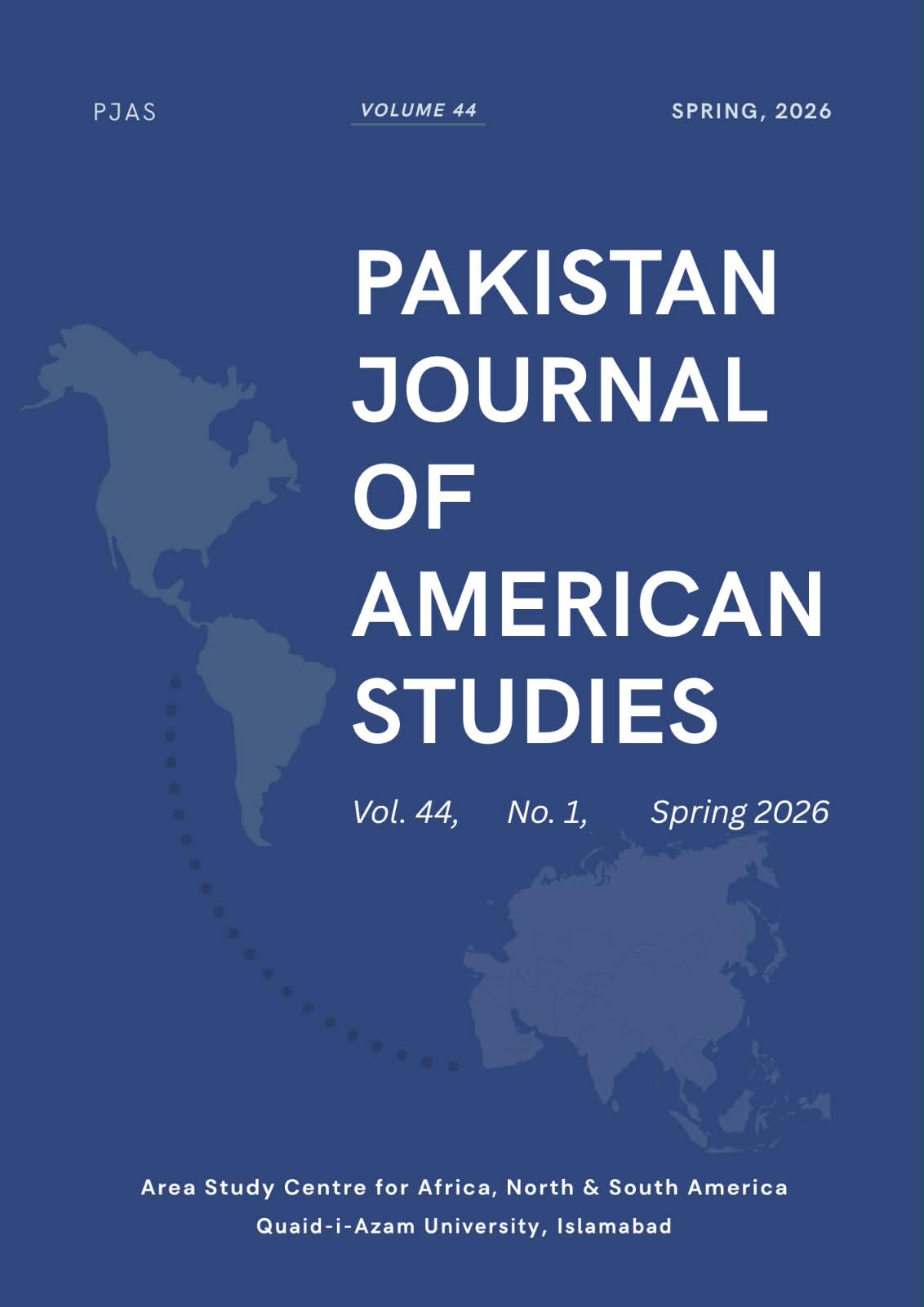
Published in Pakistan Journal of American Studies, vol. 44, no. 1
Argues that US-China competition over rare-earth processing has structurally shifted the US-Pakistan relationship from aid toward trade, and traces the sequence of steps that led to the September 2025 memorandum of understanding between Pakistan's Frontier Works Organization and US Strategic Metals.
Abstract
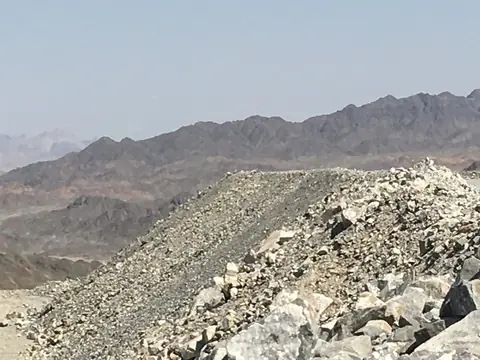
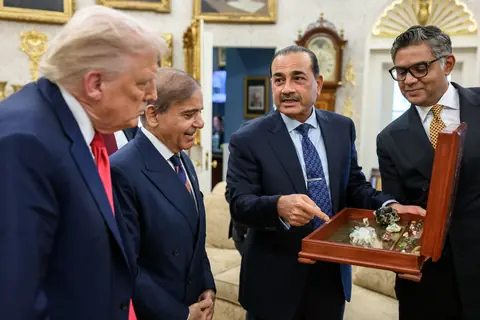
Washington’s ‘From Aid to Trade’ policy shift for Islamabad redefines the US-Pakistan relationship from security-aid dependency towards a trade-focused critical minerals partnership. The paper explores an underlying systemic pressure rather than deliberate bilateral policy design, examining the US-Pakistan partnership by applying Kenneth Waltz’s structural realism to establish why this shift is systematically inevitable and Edward Luttwak’s geo-economics to elaborate how economic instruments have replaced military ones? The present research grounds its argument in three empirical domains: Pakistan’s critical mineral endowment, FWO-USSM Agreement, and China’s dominance of global mineral supply chains. Across these domains, a ten-stage sequential cascade constitutes a systemic fabric of the US-Pakistan relationship. The paper finds out that this structurally compelled transformation carries substantial implications for both the actors, redefining Pakistan’s position and resolving the US mineral dilemma with consequences that extend beyond the bilateral partnership towards a broader architecture of great power competition over the critical resources.
The full text is published by the journal or publisher: read it on their site.
How to cite
Chicago (author-date)
Yousaf, Shabnam, and Sajid Mahmood Awan. 2026. “From Aid to Trade: Pak-US Critical Minerals Partnership.” Pakistan Journal of American Studies 44 (1). https://pjas.qau.edu.pk/index.php/pjas/issue/archive.
APA (7th edition)
Yousaf, S., & Awan, S. M. (2026). From Aid to Trade: Pak-US Critical Minerals Partnership. Pakistan Journal of American Studies, 44(1). https://pjas.qau.edu.pk/index.php/pjas/issue/archive
Other formats
MLA (9th edition)
Yousaf, Shabnam, and Sajid Mahmood Awan. “From Aid to Trade: Pak-US Critical Minerals Partnership.” Pakistan Journal of American Studies, vol. 44, no. 1, 2026, https://pjas.qau.edu.pk/index.php/pjas/issue/archive.
BibTeX
@article{yousaf2026aid,
  title = {{From Aid to Trade: Pak-US Critical Minerals Partnership}},
  author = {Yousaf, Shabnam and Awan, Sajid Mahmood},
  journal = {Pakistan Journal of American Studies},
  year = {2026},
  month = {sep},
  volume = {44},
  number = {1},
  url = {https://pjas.qau.edu.pk/index.php/pjas/issue/archive}
}RIS (EndNote, Zotero, Mendeley)
TY  - JOUR
TI  - From Aid to Trade: Pak-US Critical Minerals Partnership
AU  - Yousaf, Shabnam
AU  - Awan, Sajid Mahmood
PY  - 2026
DA  - 2026/09/17/
JO  - Pakistan Journal of American Studies
T2  - Pakistan Journal of American Studies
VL  - 44
IS  - 1
M3  - Journal article
UR  - https://pjas.qau.edu.pk/index.php/pjas/issue/archive
AB  - Washington’s ‘From Aid to Trade’ policy shift for Islamabad redefines the US-Pakistan relationship from security-aid dependency towards a trade-focused critical minerals partnership. The paper explores an underlying systemic pressure rather than deliberate bilateral policy design, examining the US-Pakistan partnership by applying Kenneth Waltz’s structural realism to establish why this shift is systematically inevitable and Edward Luttwak’s geo-economics to elaborate how economic instruments have replaced military ones? The present research grounds its argument in three empirical domains: Pakistan’s critical mineral endowment, FWO-USSM Agreement, and China’s dominance of global mineral supply chains. Across these domains, a ten-stage sequential cascade constitutes a systemic fabric of the US-Pakistan relationship. The paper finds out that this structurally compelled transformation carries substantial implications for both the actors, redefining Pakistan’s position and resolving the US mineral dilemma with consequences that extend beyond the bilateral partnership towards a broader architecture of great power competition over the critical resources.
LA  - en
ER -Download citation: BibTeX (.bib) RIS (.ris)