NuclearStrains and embargoes
Kissinger in Lahore: aircraft for a reprocessing plant
Washington tried to buy Pakistan out of a French nuclear deal. Bhutto refused, and the story of a Kissinger threat became part of Pakistani political lore.
1 min read
Lahore, August 1976
Punjab, Pakistan
31° 33′ N · 74° 20′ E
Lahore, August 1976
Punjab, Pakistan
31° 33′ N · 74° 20′ E
Background
In the mid-1970s Pakistan negotiated with the French firm SGN for a plant to reprocess spent reactor fuel, a technology that could also produce plutonium for weapons. Negotiations concluded in 1976, and the plant was to be placed under international safeguards1. After India's 1974 test, the Ford administration saw the deal as a step towards a Pakistani bomb2. President Ford wrote to Bhutto about it in March 19763.
What happened
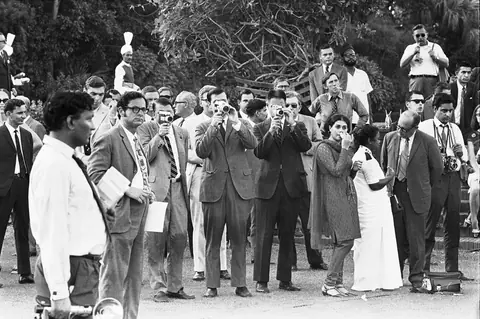
On 10 August 1976 Kissinger called on Bhutto at the Governor's House in Lahore. According to Pakistani accounts, he came with an offer of 110 A-7 attack aircraft for the Pakistan Air Force, which he indicated Congress would likely approve, in exchange for cancelling the reprocessing purchase4. Bhutto refused, insisting that Pakistan needed the plant for its energy programme; according to American memoranda of the conversation later released by the National Security Archive, Kissinger said that such claims insulted American intelligence4,5. At the official dinner the two traded barbed toasts about "reprocessing"4.
A contested memory
For decades it was widely believed in Pakistan that Kissinger had threatened to make "a horrible example" of Bhutto - a phrase Bhutto himself later invoked when accusing the United States of plotting his downfall. The declassified American records of the Lahore meeting do not contain such a threat, and Pakistani writers have since questioned the story, though the documents leave no doubt about how hard Washington pressed4,6.
What followed
The United States continued to press both Pakistan and France. France ended the contract in 1978, citing Pakistan's refusal to accept safeguards on its entire nuclear programme, after strong American objections1,7. By then Pakistan was pursuing a different path to fissile material - uranium enrichment - which would lead to the aid cut-off of 19797.
Sources
- Chashma (Pakistan nuclear facilities guide), Federation of American Scientists · Reference
- The United States and Pakistan, 1947–2000: Disenchanted Allies (Dennis Kux), Woodrow Wilson Center Press / Johns Hopkins University Press, 2001 · Scholarly
- Letter from Ford to Bhutto, 19 March 1976, Nonproliferation archive (nonproarchive.com), 19 March 1976 · Primary document
- Kissinger, Bhutto and the reprocessing plant (Dawn feature), Dawn · Press
- Foreign Relations of the United States, 1969–1976, Volume E–8, Document 235: Memorandum of Conversation, Office of the Historian, US Department of State, August 1976 · Primary document
- The myth of oft-quoted foreign pressure in Pakistan's politics, The Friday Times, 30 March 2022 · Press
- Pakistan's Chashma plutonium separation plant possibly operational, Institute for Science and International Security · Scholarly
Next in The Long ArcBhutto blames America; Zia takes power