DiplomacyStrains and embargoes
Bhutto in Washington: support for Pakistan's integrity
Visiting Nixon after the loss of East Pakistan, Bhutto secured a public American pledge of support for what remained of his country.
1 min read
Dateline
Washington
District of Columbia, United States
38° 54′ N · 77° 02′ W
Dateline
Washington
District of Columbia, United States
38° 54′ N · 77° 02′ W
What happened
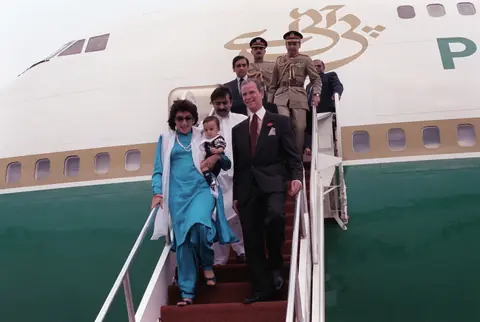
Zulfikar Ali Bhutto, who had become president after the 1971 war and prime minister under the new 1973 constitution, made an official visit to Washington from 18 to 20 September 1973 before going on to the United Nations in New York1. In the joint statement issued on 20 September, President Nixon assured him of strong American support for Pakistan's independence and territorial integrity, describing this as a guiding principle of American foreign policy. The two leaders pledged to work for a lasting peace in South Asia based on sovereignty, territorial integrity and non-interference2.
Why it mattered
For a Pakistan that had lost half its territory less than two years earlier, the public assurance had real value. Bhutto also pressed for an end to the arms embargo, which the United States maintained for another eighteen months3. The visit showed that, despite Bhutto's earlier criticism of the United States and his withdrawal from SEATO in 1972, both governments wanted a working relationship3,4.
Sources
- List of international prime ministerial trips made by Zulfikar Ali Bhutto, Wikipedia · Reference
- Joint Statement Following Discussions With Prime Minister Bhutto of Pakistan, The American Presidency Project, UC Santa Barbara, 20 September 1973 · Primary document
- The United States and Pakistan, 1947–2000: Disenchanted Allies (Dennis Kux), Woodrow Wilson Center Press / Johns Hopkins University Press, 2001 · Scholarly
- Address at a public meeting at Mardan on November 18, 1972, Bhutto.org, 18 November 1972 · Primary document
Next in The Long ArcIndia's nuclear test changes the agenda