Security & defenceKey momentThe post-9/11 partnership
After 11 September, Pakistan turns against the Taliban
Within days of the attacks on New York and Washington, General Musharraf accepted American demands for cooperation, abandoning the Taliban government Pakistan had backed and making his country a front-line partner once more.
3 min read
Jacobabad · Pasni · Dalbandin, September 2001
airfields used by the US-led campaign
Jacobabad · Pasni · Dalbandin, September 2001
airfields used by the US-led campaign
Background
On 10 September 2001 Pakistan was, in American eyes, a problem state. It was under layered US sanctions for its 1998 nuclear tests and for the military takeover of October 1999 that had brought General Pervez Musharraf to power. It was also one of only three governments in the world that recognised the Taliban regime in Kabul, which was sheltering Osama bin Laden and al-Qaeda8.
What happened
The attacks of 11 September changed that calculus within hours. On 13 September Deputy Secretary of State Richard Armitage met the head of Pakistan's Inter-Services Intelligence (ISI), Lieutenant-General Mahmud Ahmed, who happened to be in Washington, and set out seven demands. According to declassified State Department cables published by the National Security Archive, they included stopping al-Qaeda operatives at the border, granting blanket overflight and landing rights, providing access to Pakistani territory and naval facilities, sharing intelligence, publicly condemning the attacks, cutting off fuel and recruits to the Taliban, and breaking off relations with the Taliban if it continued to shelter bin Laden. The same documents record that Musharraf accepted the list without conditions1.
Musharraf explained his decision to Pakistanis in a televised address on 19 September. He told the country that it faced its gravest crisis since the 1971 war, that the United States had asked for help in three areas - intelligence and information exchange, use of airspace and logistic support - and that refusing would endanger Pakistan's vital interests, including its nuclear assets and the Kashmir cause. Protests by religious parties preceded and followed the speech2.
Musharraf later said that Armitage had warned that Pakistan would be bombed if it did not cooperate; Armitage denied making any such threat, though he acknowledged speaking firmly to the ISI chief3,4. The episode remains contested, and both versions are widely cited.
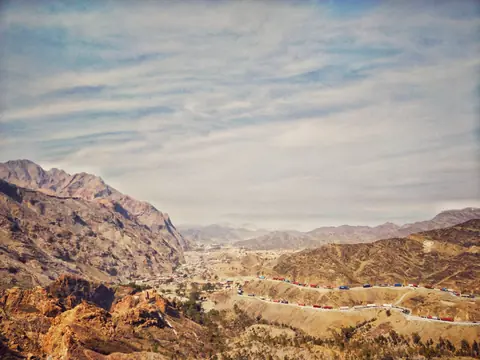
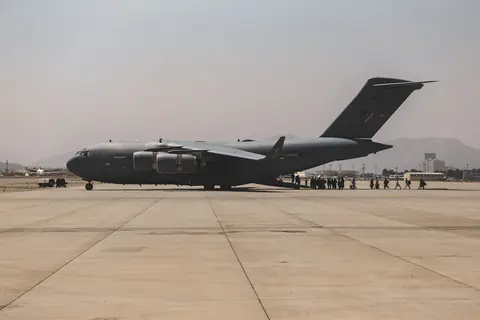
Cooperation followed quickly. Pakistan allowed US and allied aircraft to use its airspace and made several airfields available for logistics, search-and-rescue and support operations - among them Jacobabad, Pasni and Dalbandin, with Shamsi in Balochistan also used by the Americans - although Pakistani officials said the bases would not be used to launch attacks5. Karachi's port and the roads through the Khyber Pass and Chaman became the main supply routes into landlocked Afghanistan. Pakistani forces later arrested hundreds of al-Qaeda suspects, many of whom were handed to the United States.
On 10 November 2001 Musharraf met President George W. Bush in New York. Their joint statement spoke of a broad and long-term relationship; Bush said he had lifted sanctions and committed more than $1 billion in support, and undertook to consider Pakistan's requests for market access and debt relief6,7.
Why it mattered
For Washington, Pakistan's turn was indispensable: no campaign in Afghanistan could easily be mounted or sustained without Pakistani airspace, ports and roads. For Musharraf, the decision ended Pakistan's diplomatic isolation, brought sanctions relief and aid, and gave his government international standing. It also placed Pakistan in a deeply uncomfortable position. The Taliban had been Islamabad's clients, many Pakistanis opposed the war, and the fighting soon spilled across the porous border into the tribal areas.
Legacy
The bargain struck in September 2001 shaped the decade that followed: large flows of US assistance and reimbursements, close intelligence cooperation against al-Qaeda, and persistent American suspicion that elements of the Pakistani state continued to tolerate the Afghan Taliban. Pakistanis, for their part, came to see the alliance as one that cost them tens of thousands of lives and heavy economic losses while bringing them little trust in return. Both narratives took root in these first weeks.
Sources
- On anniversary of 9/11, new documents shed light on US-Pakistani relations, Unredacted (blog of the National Security Archive, George Washington University), 10 September 2010 · Primary document
- Musharraf address to the nation (NewsHour report, 19 September 2001), PBS NewsHour, 19 September 2001 · Press
- US ‘threatened to bomb’ Pakistan, Al Jazeera, 22 September 2006 · Press
- Armitage denies threatening Pakistan after 9/11, NBC News, September 2006 · Press
- Shahbaz Air Base (Jacobabad), GlobalSecurity.org · Reference
- Joint Statement for the Visit of Pakistani President Pervez Musharraf, New York, The American Presidency Project, UC Santa Barbara, 10 November 2001 · Primary document
- Remarks following meeting with President Musharraf (CNN transcript, 10 November 2001), CNN, 10 November 2001 · Press
- United Arab Emirates won’t recognize Taliban, ABC News, September 2001 · Press
Next in The Long ArcA decade of sanctions is lifted in five weeks