Security & defenceThe alliance era
The U-2 that flew from Peshawar
When the Soviets shot down Gary Powers, Pakistan discovered the price of being a front-line ally.
1 min read
What happened
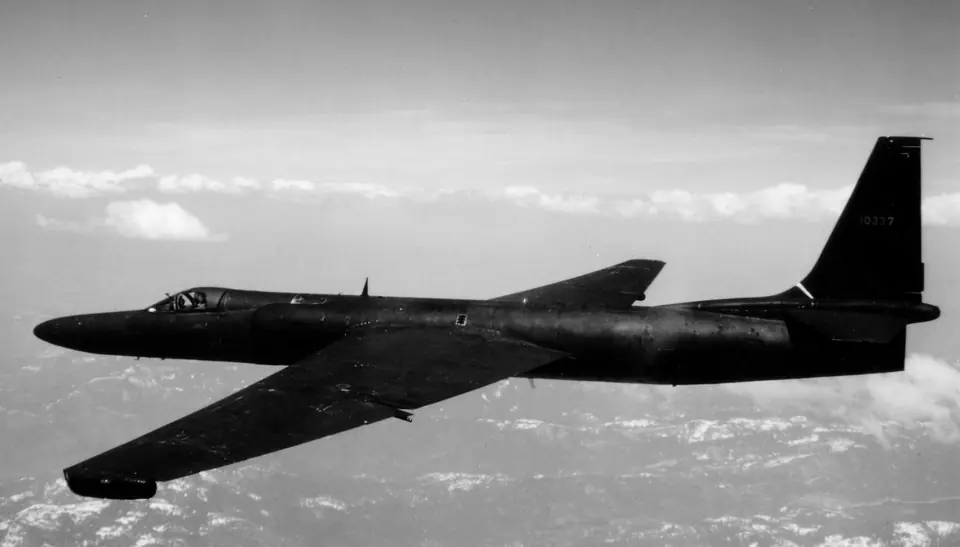
On 1 May 1960 the CIA pilot Francis Gary Powers took off from Peshawar in a Lockheed U-2 on a mission to fly across the Soviet Union, photographing military installations, and land at Bodø in Norway1,2. Near Sverdlovsk in the Urals his aircraft was brought down by a Soviet surface-to-air missile. Powers parachuted to safety and was captured1.
On 5 May the Soviet leader Nikita Khrushchev announced that an American spy plane had been shot down. On 7 May he revealed that the pilot was alive and had testified that he had taken off from Peshawar2. The incident came two weeks before an East–West summit in Paris, which collapsed amid the recriminations1,2. Powers was convicted of espionage and was released in February 1962 in exchange for the Soviet intelligence officer Rudolf Abel2.
Pakistan in the spotlight
For Pakistan the episode was a shock. The Soviet Union protested, and Khrushchev told Pakistan's ambassador at a reception that he had drawn a red circle round Peshawar on his map - a warning that bases used for such flights could become targets3,4. American records show Pakistani and US officials discussing the fallout in Washington in June 19605.
According to the historian Lawrence Lifschultz, Pakistan's military authorities afterwards withdrew permission for US intelligence flights from Peshawar, although the nearby Badaber communications station continued to operate under its lease3.
Why it mattered
The U-2 affair showed Pakistanis that the alliance carried real risks as well as benefits, and that their territory could be drawn into superpower confrontation. It became a lasting reference point in Pakistani debates about the costs of alignment with Washington3,6.
Sources
- Milestones: U-2 Overflights and the Capture of Francis Gary Powers, 1960, Office of the Historian, US Department of State · Official
- U-2 Affair, Encyclopaedia Britannica · Reference
- From the U-2 to the P-3: the US–Pakistan relationship (Lawrence Lifschultz), New Left Review, 1986 · Scholarly
- Pakistan–Soviet Union relations, Wikipedia · Reference
- Foreign Relations of the United States, 1958–1960, Volume XV, Document 388: Memorandum of a Conversation, Department of State, Washington, June 2, 1960, Office of the Historian, US Department of State, 2 June 1960 · Primary document
- The United States and Pakistan, 1947–2000: Disenchanted Allies (Dennis Kux), Woodrow Wilson Center Press / Johns Hopkins University Press, 2001 · Scholarly
Next in The Long ArcLyndon Johnson and the camel driver