Security & defenceThe Afghan decade
Stinger missiles reach the Afghan resistance
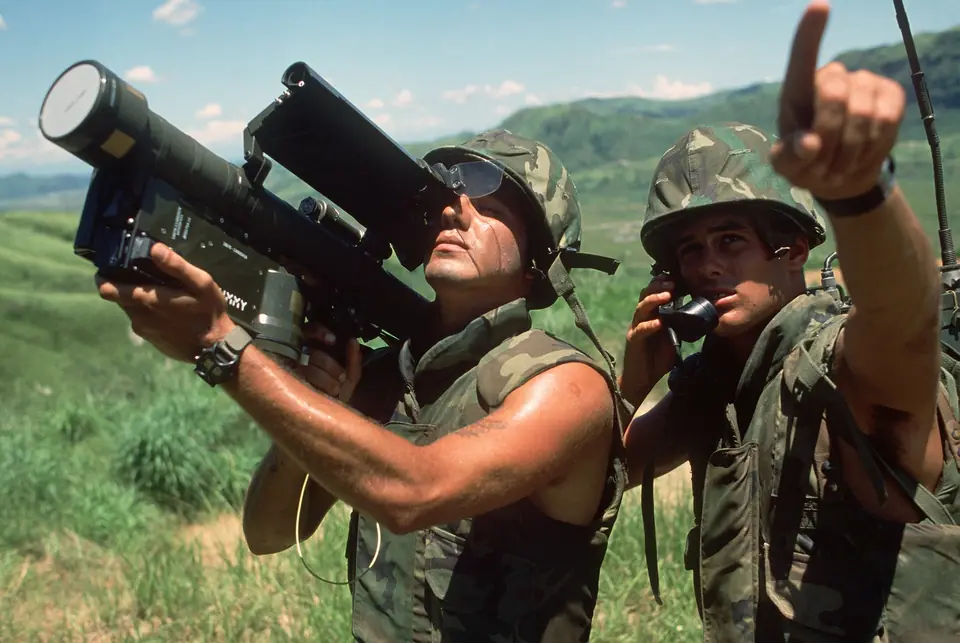
In 1986 the Reagan administration broke with past practice and supplied US-made Stinger anti-aircraft missiles to the mujahideen through Pakistan, despite fears of Soviet retaliation.
1 min read
Background
By the mid-1980s Soviet helicopter gunships were inflicting heavy losses on the mujahideen. The covert programme had until then relied largely on Soviet-pattern and other non-American weapons, partly to preserve deniability and partly to avoid provoking the Soviet Union against Pakistan, the base of the operation1,2.
What happened
In March 1986, in a closely held decision, the administration agreed to supply several hundred Stinger missiles covertly to anti-communist rebels in Afghanistan and Angola1. Contemporary reporting noted that this was a major shift from the earlier policy of avoiding top-of-the-line American arms1. The CIA had been among the sceptics, warning that Stingers might provoke Soviet retaliation against Pakistan, and some in Congress feared that the missiles could find their way to terrorist groups2.
The missiles were delivered to Pakistan, and Pakistani instructors of the ISI trained mujahideen teams to use them3. In September 1986 a newly trained team fired its first Stingers at Soviet Mi-24 helicopter gunships near Jalalabad airfield4.
How much difference did it make?
Many accounts credit the Stinger with changing the air war and helping persuade Moscow to leave. Scholars have challenged this: Alan Kuperman, writing in Political Science Quarterly in 1999, argued that the Soviet leadership had already moved towards withdrawal before the missiles arrived and that their battlefield effect has been exaggerated5. A Harvard Kennedy School case study uses the decision to examine the politics of covert action inside the US government6. Pakistani accounts, notably that of the ISI’s Brigadier Mohammad Yousaf, emphasise how the missiles changed the mujahideen’s tactics and morale3.
Legacy
The Stinger decision deepened Pakistan’s exposure: it made the covert war more visible and raised the stakes of Soviet retaliation along the border. After the war, Washington spent years trying to buy back missiles that remained in Afghanistan, an effort that became a symbol of the unintended consequences of the programme.
Sources
- NEW MISSILES GOING TO REBELS AS WARNING TO SOVIETS (press clipping), CIA FOIA Reading Room, 1986 · Press
- Slate explainer on the Stinger decision, Slate · Press
- Mohammad Yousaf (author page: The Bear Trap), Pen & Sword Books · Scholarly
- Stop Panicking About the Stingers, Foreign Policy · Press
- Political Science Quarterly, Vol. 114, No. 2 (Summer 1999) - Alan J. Kuperman, ‘The Stinger Missile and U.S. Intervention in Afghanistan’, Oxford Academic / Political Science Quarterly, 1999 · Scholarly
- Politics of a Covert Action: The U.S., the Mujahideen, and the Stinger Missile (Case 1546.0), Harvard Kennedy School Case Program · Scholarly
Next in The Long ArcJunejo in Washington and a second, $4 billion package