Security & defenceRecalibration
The F-16 deal that Congress would not pay for
Congress refused to let US funds subsidise eight F-16s for Pakistan, and the Pentagon withheld $300 million over the Haqqani network - signs that the post-2001 aid model was ending.
2 min read
Background
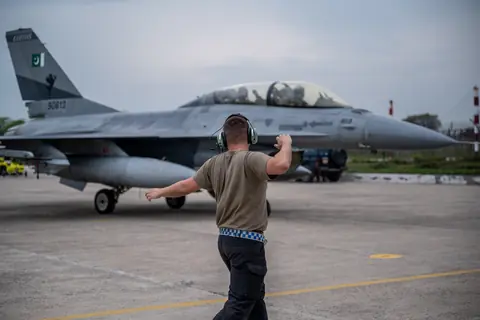
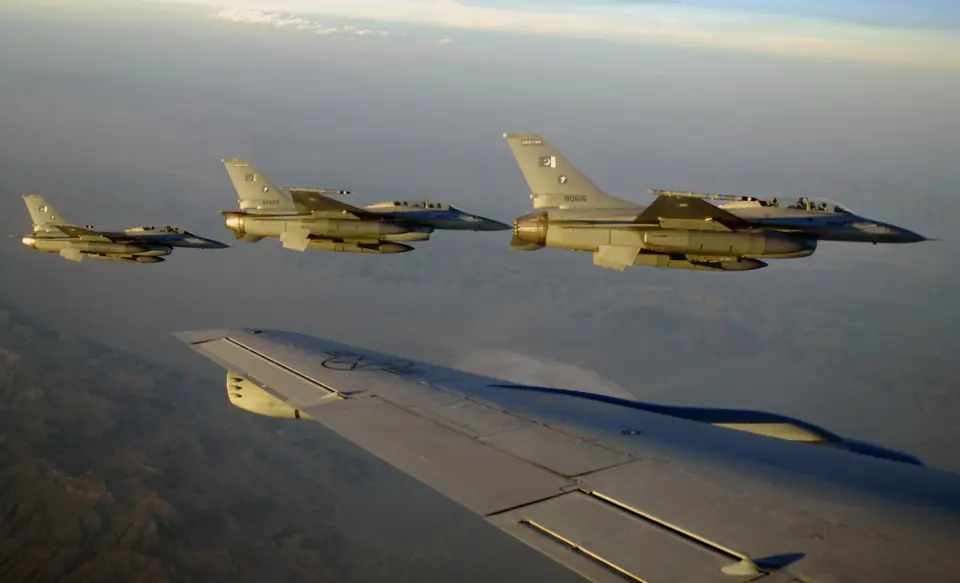
The F-16 had been a symbol of the relationship since the 1980s, when Pakistan bought its first fleet; deliveries were frozen by the Pressler sanctions in 1990 and resumed after 2001. In 2015 the two governments reached an understanding on eight more aircraft, partly paid for with US Foreign Military Financing (FMF), a grant programme.
What happened
On 11 February 2016 the Defense Security Cooperation Agency notified Congress of a possible sale of eight F-16 Block 52 aircraft, with equipment, training and support, at an estimated cost of $699.04 million; the notification said the aircraft would improve Pakistan's ability to conduct counter-insurgency and counter-terrorism operations1,2. India objected. In March the Senate rejected a resolution of disapproval, but the chairman of the Senate Foreign Relations Committee, Bob Corker, used his authority to block the use of FMF for the purchase, citing what he described as Pakistan's duplicity towards the Afghan Taliban3,4. Under the earlier arrangement Pakistan would have paid about $270 million and US grants the rest; in late April and early May the State Department told Islamabad it would have to pay the full amount itself4,5.
Pakistan's foreign affairs adviser, Sartaj Aziz, told the Senate in Islamabad and the media that if financing was not provided Pakistan would look for aircraft elsewhere, noting that the Pakistan-Chinese JF-17 could fill the role5,6. The sale was not concluded.
In August 2016 Defence Secretary Ashton Carter declined to certify to Congress that Pakistan had taken sufficient action against the Haqqani network, so $300 million in Coalition Support Fund reimbursements was withheld - the first time the Obama administration had held back such funds over the Haqqanis7. In May the US had also killed the Afghan Taliban leader, Mullah Akhtar Mansour, in a drone strike in Balochistan, which Pakistan protested as a violation of its sovereignty8.
Why it mattered
The episode showed Congress, not just the executive, using leverage over Pakistan, and it signalled the end of the era in which US grants subsidised major Pakistani weapons purchases. For Pakistan it reinforced the case for diversifying suppliers towards China, already its largest arms partner.
Legacy
US security assistance continued to shrink and was largely suspended in 2018. The existing F-16 fleet remained, and its sustainment became the subject of a further controversy in 2022.
Sources
- Government of Pakistan – F-16 Block 52 Aircraft, Defense Security Cooperation Agency, 11 February 2016 · Official
- DSCA approves F-16 Block 52 sales to Pakistan, Defense News, 12 February 2016 · Press
- Pakistan F-16 sale survives US Senate dogfight, Defense News, 10 March 2016 · Press
- US Pakistan F-16 loan (RFE/RL Gandhara), Radio Free Europe/Radio Liberty, May 2016 · Press
- U.S. tells Pakistan it will have to fund F-16s itself, Morung Express (Reuters), May 2016 · Press
- Statement by Adviser on Foreign Affairs Mr. Sartaj Aziz in the Senate of Pakistan, 12 May 2016, Ministry of Foreign Affairs, Pakistan, 12 May 2016 · Official
- US holds back some military aid for Pakistan, CNN, 4 August 2016 · Press
- Taliban official: group’s leader killed in drone strike (AP), Washington Times, 22 May 2016 · Press
Next in The Long ArcTrump’s South Asia strategy singles out Pakistan