Economy & aidKey momentThe Afghan decade
Reagan’s $3.2 billion package and the F-16 deal
A six-year programme of economic aid and military sales, including 40 F-16 fighters, restored the alliance and set aside the nuclear sanctions of 1979.
2 min read
Background
The Reagan administration took office in January 1981 determined to confront Soviet expansion and to repair relations with Pakistan, which had rejected the Carter administration’s offer a year earlier. The obstacle was legal as much as political: since April 1979, US assistance to Pakistan had been barred under the Symington Amendment because of its unsafeguarded uranium-enrichment programme.
What happened
Negotiations moved quickly. In June 1981 the State Department announced agreement on a package worth $3.2 billion over six years, combining credits for military purchases, including F-16 fighter aircraft, with economic aid1. Pakistan formally accepted in September 1981 after the package was adjusted so that economic and military assistance were roughly equal in size within the same total, and the planned F-16 sale was raised to 40 aircraft1. In December 1981 Congress approved the foreign-assistance legislation that funded the programme, together with a six-year waiver of the Symington sanctions1.
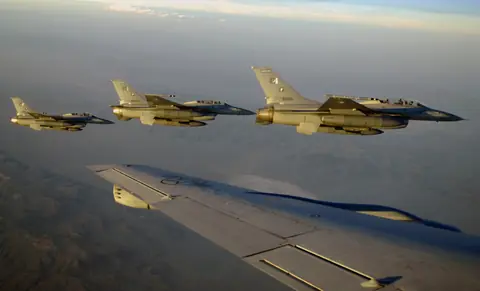
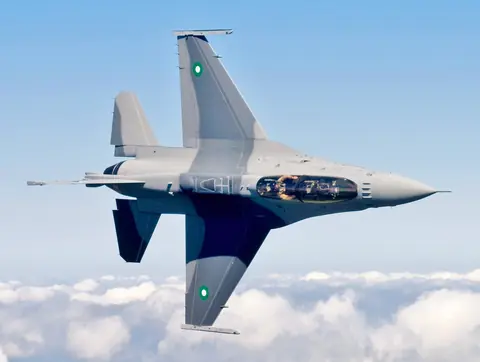
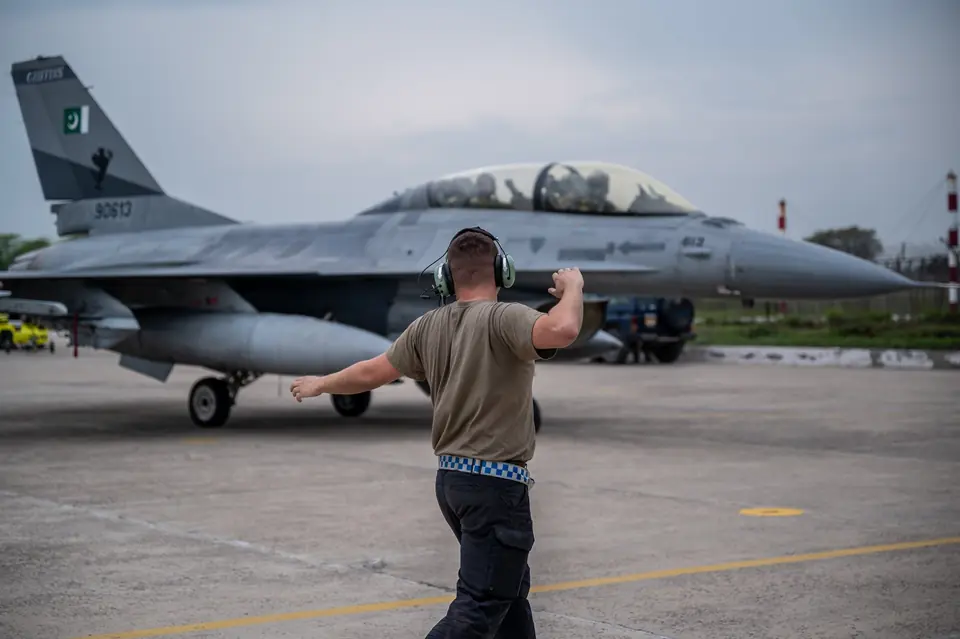
The F-16 sale proved the most contentious element. The aircraft were among the most advanced in the US inventory, and their sale to Pakistan worried India and members of Congress2,3. Pakistan signed a letter of agreement in December 1981 for up to 40 F-16A/B aircraft; the first arrived at Sargodha air base on 15 January 1983, and all 40 had been delivered by 19874. The administration presented the programme to Congress as a way to bolster a front-line state under Soviet pressure, and argued that a confident Pakistan would be less inclined to seek nuclear weapons5,6.
Perspectives
For the Zia government the package was a vindication of its refusal of Carter’s smaller offer and a sign that Washington accepted Pakistan as a strategic partner on its own terms6. For India, which saw the F-16s as a threat aimed at it rather than at the Soviet Union, the package confirmed suspicions about US intentions in the region. In Congress, the debate turned on whether aid would restrain or reward Pakistan’s nuclear ambitions; the waiver was approved partly on the basis of Pakistani assurances that it did not intend to build a nuclear weapon3.
Why it mattered
The 1981 package reversed the downward slide of the late 1970s and made Pakistan one of the largest recipients of US assistance during the decade. It also established the bargain that defined the Afghan years: Washington would set aside its nuclear sanctions in return for Pakistan’s cooperation against the Soviet Union, while Congress kept a legal lever in reserve. The six-year waiver ran out in 1987, which is why the nuclear question returned so sharply when the second package was debated7.
Legacy
The F-16s became a lasting symbol of the relationship’s ups and downs. A later order, paid for at the end of the decade, was frozen under the Pressler sanctions in 1990, and the dispute over those undelivered aircraft took most of the 1990s to resolve.
Sources
- Chronology of Key Events (US v. Pakistan sanctions case), Peterson Institute for International Economics · Scholarly
- Arms sale tests US-Pakistan ties, The Christian Science Monitor, 12 November 1981 · Press
- Pakistan aid proposal faces crucial House test, The Christian Science Monitor, 11 September 1981 · Press
- F-16 users: Pakistan, F-16.net · Reference
- U.S. cooperation with Pakistan: shared security interests (12 November 1981), US Department of State (via South Asia Commons), 12 November 1981 · Official
- The United States and Pakistan, 1947–2000: Disenchanted Allies (Dennis Kux), Woodrow Wilson Center Press / Johns Hopkins University Press, 2001 · Scholarly
- Pakistan: relations with the United States (country study text), GlobalSecurity.org (reproducing Library of Congress country study) · Reference
Next in The Long ArcZia-ul-Haq’s state visit to the White House