DiplomacyRecalibration
A second Sharif visit and a pledge on Lashkar-e-Taiba
In October 2015 a joint statement named Lashkar-e-Taiba and the Haqqani network for the first time, as Pakistan pledged action against UN-designated groups.
2 min read
Joint Statement
Joint Statement
Lashkar-e-Taiba and the Haqqani network named
President Obama · Prime Minister Nawaz Sharif
Joint Statement
Joint Statement
Lashkar-e-Taiba and the Haqqani network named
President Obama · Prime Minister Nawaz Sharif
Background
By 2015 Pakistan's military operation in North Waziristan, Zarb-e-Azb, launched in June 2014, had cleared the main militant strongholds in the tribal areas, and the Army Public School massacre in Peshawar in December 2014 - in which Pakistani Taliban gunmen killed some 150 people, most of them children - had hardened public opinion against militancy4,6. In Washington, however, concern persisted that the Afghan Taliban and the Haqqani network continued to operate from Pakistan, and India pressed for action against Lashkar-e-Taiba (LeT), blamed for the 2008 Mumbai attacks.
What happened
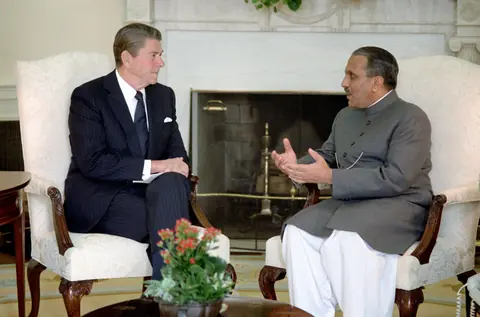
Sharif's second official visit ran from 20 to 23 October 2015, with talks at the White House on 22 October1,2. The Pakistani government published the same joint statement5. The leaders' joint statement described a resilient US–Pakistan partnership as vital to regional and global peace1. In it Sharif set out Pakistan's resolve to take effective action against UN-designated terrorist individuals and entities, including Lashkar-e-Taiba and its affiliates, in line with UN Security Council resolutions and Financial Action Task Force obligations, and Pakistan undertook to ensure that all Taliban groups, including the Haqqani network, were unable to operate from its soil1,3. It was the first time LeT and the Haqqani network had been named in such a statement3. The statement also covered energy, trade, education, climate and nuclear security; reports before the visit about a possible civil nuclear understanding came to nothing.
Why it mattered
For Washington, the written commitments created a benchmark against which Pakistan's performance could be judged - and was, in the aid withholdings of 2016 and 2018. For Islamabad, the visit underlined that the relationship continued on a working basis, but it also showed how firmly American priorities now ran through India and Afghanistan.
Legacy
Within months Congress blocked US financing for the F-16 sale agreed in principle around the visit, and in 2016 the Pentagon withheld reimbursements over the Haqqani network. The 2015 statement was the last joint statement issued at a White House meeting between a US president and a Pakistani prime minister until 2019.
Sources
- 2015 Joint Statement by President Barack Obama and Prime Minister Nawaz Sharif, The White House (Obama archives), 22 October 2015 · Primary document
- Obama calls for closer ties with Pakistan, Voice of America (Learning English), 22 October 2015 · Press
- Nawaz-Obama meeting: agreement to act effectively against all terrorist groups, Institute of Strategic Studies Islamabad, October 2015 · Scholarly
- The successes and failures of Pakistan’s Operation Zarb-e-Azb, Jamestown Foundation, 2015 · Scholarly
- 2015 Joint Statement (Pakistani release), Ministry of Foreign Affairs, Pakistan, 22 October 2015 · Official
- Peshawar school massacre, Encyclopædia Britannica · Reference
Next in The Long ArcThe F-16 deal that Congress would not pay for