Security & defenceKey momentThe post-9/11 partnership
Salala: 24 soldiers killed, supply lines cut
NATO air strikes on two Pakistani border posts brought relations to their lowest point of the decade: Pakistan closed the supply routes, expelled the Americans from Shamsi and boycotted the Bonn conference.
2 min read
Salala, November 2011
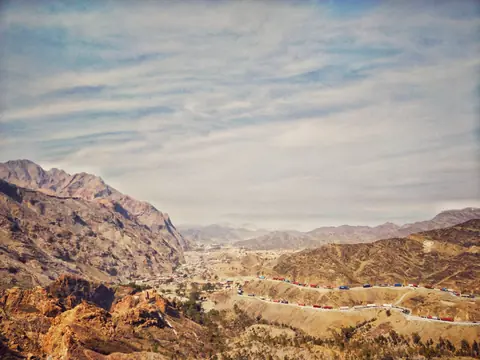
Mohmand, on the Afghan border
34° 36′ N · 71° 12′ E
Salala, November 2011
Mohmand, on the Afghan border
34° 36′ N · 71° 12′ E
Background
By late 2011 relations were already under severe strain after the Raymond Davis affair and the Abbottabad raid. In September Admiral Mike Mullen told the Senate Armed Services Committee that the Haqqani network acted as a "veritable arm" of the ISI and had carried out attacks in Kabul with ISI support; Foreign Minister Hina Rabbani Khar warned that such recriminations risked losing an ally6.
What happened
During a night operation by US and Afghan forces near the border on 25–26 November 2011, US helicopters and an AC-130 gunship, supported by fighter aircraft, attacked two Pakistani army posts at Salala in Mohmand Agency, killing 24 Pakistani soldiers1,2. Each side later said the other had fired first.
Pakistan's response was the strongest of the decade. It closed the ground supply routes through its territory used by NATO forces in Afghanistan, ordered the United States to vacate Shamsi airbase in Balochistan within fifteen days, and announced a review of all cooperation2. The last US personnel left Shamsi on 11 December3. Pakistan also boycotted the international conference on Afghanistan in Bonn on 5 December, despite American requests to attend4.
The inquiry
US Central Command appointed Brigadier General Stephen Clark to investigate. His December report concluded that US forces had acted in self-defence and with appropriate force after being fired on, but that inadequate coordination, incorrect mapping information and an overarching lack of trust had contributed, and that errors had been made on both sides1,5. The Pakistan Army formally rejected the findings, saying the claims of self-defence and proportionate force were contrary to the facts5,7. President Obama and other officials expressed condolences, but Washington did not initially apologise - the central Pakistani demand.
Why it mattered
The closure of the supply lines showed the leverage Pakistan held over the war in Afghanistan, while US forces' increased use of the costlier Northern Distribution Network through Central Asia showed the limits of that leverage. Parliament in Islamabad undertook a review of the terms of engagement with the United States.
Legacy
The routes stayed closed for seven months, until Hillary Clinton said in July 2012 that the United States was sorry for the losses suffered by the Pakistani military. Salala is commemorated in Pakistan as a national loss and remains a reference point for Pakistani demands that the relationship be based on respect for sovereignty.
Sources
- USCENTCOM directs investigation into Afghan-Pakistan border incident, US Central Command, November 2011 · Official
- NATO airstrikes kill Pakistani soldiers, Boston Globe, 27 November 2011 · Press
- US vacates Pakistani air base, CNN, 11 December 2011 · Press
- Afghan conference beset by boycotts, Al Jazeera, 5 December 2011 · Press
- Pakistan rejects US probe into border deaths, Al Jazeera, 23 December 2011 · Press
- Admiral Mullen: Pakistani ISI sponsoring Haqqani attacks, FDD’s Long War Journal, 22 September 2011 · Press
- Pakistani army rejects US report on airstrikes (AP), Washington Times, 23 December 2011 · Press
Next in The Long Arc“We are sorry”: the supply lines reopen