People & cultureStrains and embargoes
The Bhola cyclone and American relief
One of the deadliest storms on record struck East Pakistan; US helicopters joined the relief effort as anger grew at the government's response.
1 min read
Dateline
Bhola
East Pakistan
22° 41′ N · 90° 39′ E
Dateline
Bhola
East Pakistan
22° 41′ N · 90° 39′ E
What happened
On the night of 12–13 November 1970 a powerful cyclone made landfall on the coast of East Pakistan, driving a storm surge over the low-lying islands and coast of the Ganges delta. Estimates of the death toll range from about 200,000 to 500,000 or more1,2.
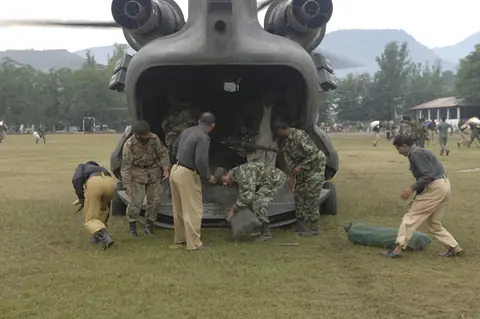
President Nixon sent a message saying he was deeply shocked and grieved, offered the sympathy of the American people and said the United States stood ready to help, pledging $10 million in aid. US Air Force C-141 transports flew helicopters to East Pakistan, and US Army helicopters carried relief supplies from Dacca airport to stricken areas1,3. Britain, Canada and other countries also sent help1.
Why it mattered
The disaster struck weeks before Pakistan's first general election. Many East Pakistanis believed the central government in Islamabad had responded slowly and inadequately, and the grievance fed support for the Awami League's landslide in December. Archer Blood, the American consul general in Dacca, later described the cyclone as the real trigger for the separation of East and West Pakistan2,4.
Sources
- Pakistan 1970 (past operations), National Defence and the Canadian Armed Forces, Government of Canada · Official
- The Bhola Cyclone and the making of Bangladesh, The Daily Star (Bangladesh) · Press
- Foreign Relations of the United States, 1969–1976, Volume E–7, Document 95: Telegram 187199 From the Department of State to the Embassy in Pakistan, Office of the Historian, US Department of State, November 1970 · Primary document
- Cyclone Bhola, Mujibur Rahman and Bangladesh's liberation, The Wire · Press
Next in The Long ArcKissinger's secret flight from Pakistan to Beijing