Security & defenceThe post-9/11 partnership
Obama puts Pakistan at the centre of the war
The new administration’s strategy treated Afghanistan and Pakistan as one challenge, set the goal of defeating al-Qaeda in both, and promised more help for Pakistan - while the “AfPak” label rankled in Islamabad.
1 min read
Background
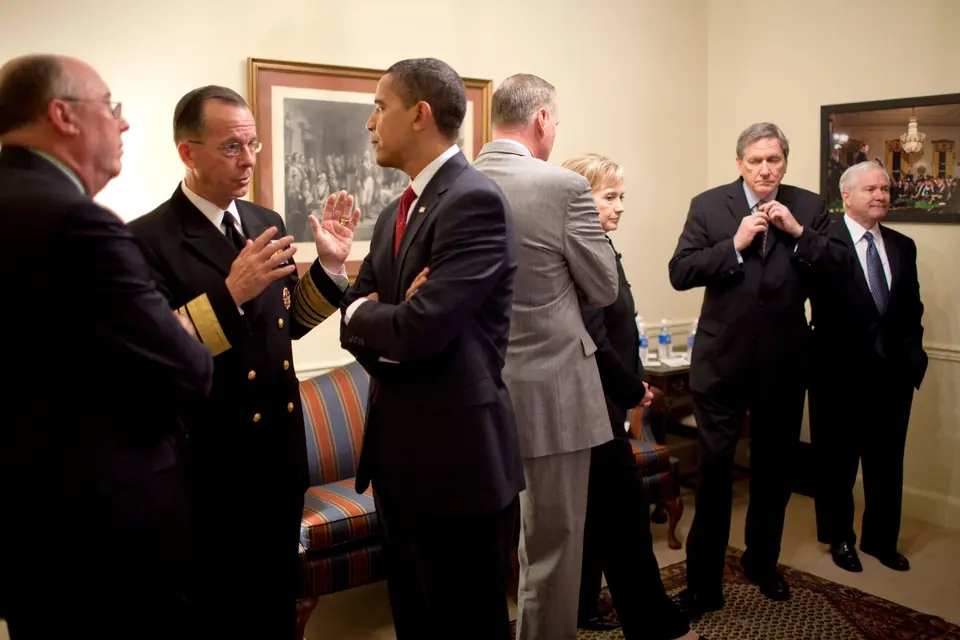
By early 2009 the Taliban insurgency in Afghanistan was gaining ground, and al-Qaeda's leadership was believed to be in Pakistan's tribal areas. Inside Pakistan the Tehrik-i-Taliban Pakistan (TTP) had seized territory, including much of the Swat valley. The new Obama administration ordered a policy review and appointed the veteran diplomat Richard Holbrooke as Special Representative for Afghanistan and Pakistan.
What happened
On 27 March 2009 Obama announced what he called a comprehensive new strategy. He defined the core goal narrowly - to disrupt, dismantle and defeat al-Qaeda in Pakistan and Afghanistan and prevent its return to either country - and described al-Qaeda as planning attacks on the United States from safe havens in Pakistan1,2. For the first time a US administration framed the two countries as a single theatre. Alongside more troops for Afghanistan, the plan called for substantially increased economic and military support to Pakistan, conditioned on performance against militants, and endorsed legislation for long-term civilian aid1,2.
Pakistani leaders welcomed the promised support but rejected the bracketing. President Zardari said Afghanistan and Pakistan were distinct countries that could not be lumped together4. Holbrooke, who had popularised the term "AfPak", said in January 2010 that the administration had stopped using it because it displeased Pakistanis3.
Why it mattered
The strategy made Pakistan the centre of gravity of American policy in the region. Later in 2009 the Pakistan Army mounted major operations in Swat and South Waziristan, which US officials welcomed, and the drone campaign intensified. The December 2009 decision to send 30,000 more troops to Afghanistan, with a timetable for drawdown, raised Pakistani concerns about what would follow an American departure.
Legacy
The tensions inherent in the strategy - reliance on Pakistan for access and counter-terrorism, combined with pressure over militant sanctuaries - defined the next two years and culminated in the crises of 2011.
Sources
- What’s new in the strategy for Afghanistan and Pakistan, The White House (Obama archives), 27 March 2009 · Primary document
- Obama Unveils Strategy for Afghanistan, Pakistan (VOA), GlobalSecurity.org, 27 March 2009 · Press
- Team Obama scuttles the term ‘AfPak’, Foreign Policy, 20 January 2010 · Press
- Pakistan rejects Obama’s AfPak strategy, Washington Examiner, 2009 · Press
Next in The Long ArcKerry–Lugar–Berman: $7.5 billion promised for Pakistan’s people