Security & defenceKey momentThe post-9/11 partnership
The drone war comes to the tribal areas
A CIA strike in South Waziristan in June 2004 began a covert campaign that would become one of the most contested features of the relationship.
2 min read
Background
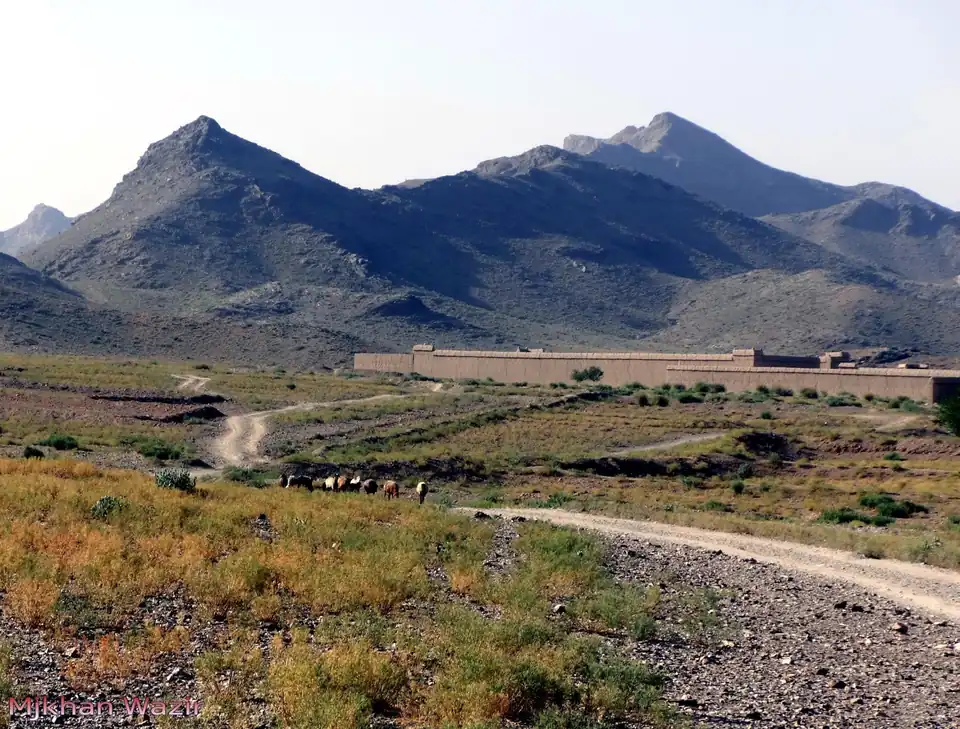
After 2001 al-Qaeda and Taliban fighters who escaped from Afghanistan found refuge in Pakistan's Federally Administered Tribal Areas (FATA), a rugged border region governed under colonial-era arrangements where the Pakistani state had limited presence. The Pakistan Army's operations there in 2004 met stiff resistance and ended in negotiated agreements with local commanders.
What happened
The first known US drone strike in Pakistan took place on 18 June 2004 near Wana in South Waziristan. It killed Nek Muhammad, a Pakistani militant commander who had sheltered foreign fighters and fought the army, along with several others, reportedly including two children1. Pakistan's military initially described the attack as its own operation. In 2013 Musharraf acknowledged that there had been an understanding with Washington allowing some strikes1.
The campaign, run by the CIA and never formally acknowledged in detail by either government at the time, grew slowly under President Bush and accelerated sharply from mid-2008. Under President Obama it reached its peak in 2010, when the New America Foundation counted 122 strikes in Pakistan2,3. Totals compiled by independent trackers from press and local reporting differ: the Bureau of Investigative Journalism counted roughly 376 strikes by early 2014, killing between about 2,500 and 3,600 people, of whom it estimated between about 400 and 900 were civilians; New America's estimates of civilian deaths were lower3,4. The US government disputed the higher civilian figures but did not publish its own country-level count. Strikes declined steeply after 2013 and became rare by 20182.
Pakistani and American perspectives
For the United States, drones were a way to strike al-Qaeda leaders and militants planning attacks on Afghanistan and the West in areas US forces could not enter; officials credited them with killing many senior figures. In Pakistan, the strikes became a potent symbol of lost sovereignty. The Foreign Office repeatedly condemned them as unilateral violations of territorial integrity and as counter-productive, citing civilian casualties6, while reporting at the time suggested that parts of the Pakistani state privately tolerated or assisted some strikes. In May 2013 the Peshawar High Court ruled that the strikes were illegal and directed the government to raise the issue at the United Nations5.
Why it mattered
The drone campaign embodied the contradictions of the post-9/11 alliance: close but deniable cooperation at the level of security agencies, and loud public opposition at the political level. It fed anti-American sentiment in Pakistan and became a central issue in Pakistani politics, while in the United States it raised legal and ethical debates about targeted killing. A 2015 Brown University Costs of War paper reviewed the evidence on its effects7.
Legacy
The campaign gradually wound down as militants were displaced by Pakistani military operations after 2014. Its legacy endures in debates over civilian harm, accountability and sovereignty, and in Pakistani public opinion of the United States.
Sources
- Ten years on: Eyewitnesses describe the aftermath of the first Pakistan drone strike, The Bureau of Investigative Journalism, 17 June 2014 · Press
- Pakistan set to mark one year with no U.S. drone strikes: is the war over?, New America · Scholarly
- One decade of drone strikes in Pakistan, Council on Foreign Relations, 2014 · Scholarly
- Covert Drone War, The Bureau of Investigative Journalism · Press
- Pakistan court declares US drone strikes illegal, JURIST, 9 May 2013 · Press
- Pakistan condemns American drone strikes (IRNA), GlobalSecurity.org, 5 June 2012 · Press
- The Impact of Drone Strikes in Pakistan, Watson Institute, Brown University (Costs of War), 2015 · Scholarly
Next in The Long ArcChinooks over Kashmir: the 2005 earthquake relief