Economy & aidKey momentThe post-9/11 partnership
Kerry–Lugar–Berman: $7.5 billion promised for Pakistan’s people
Congress authorised a tripling of civilian aid to Pakistan over five years. Its conditions provoked a storm in Pakistan, and far less than promised was ultimately spent.
2 min read
Background
Most American aid to Pakistan after 2001 had gone to the military or to budget support for Musharraf's government. Senators John Kerry and Richard Lugar, with Representative Howard Berman in the House, argued that a long-term, predictable commitment to Pakistan's civilian institutions and people would counter the perception that Washington cared only about security and would strengthen the new elected government.
What happened
The Enhanced Partnership with Pakistan Act (S. 1707) passed the Senate unanimously on 24 September 2009 and the House on 30 September; President Obama signed it on 15 October as Public Law 111-731,2. It authorised $1.5 billion a year in civilian assistance for fiscal years 2010 to 2014 - $7.5 billion in total - for purposes including energy, education, health, agriculture, governance and democratic institutions1. Security assistance was made subject to certifications, including that Pakistan was cooperating against nuclear proliferation networks and making sustained efforts against terrorist groups, and that its security forces were not subverting the political or judicial process1,3.
In Pakistan the law set off a political storm. On 7 October the army's corps commanders expressed "serious concern" about clauses they said affected national security; among other things, they objected to language about civilian oversight of senior military promotions3. Opposition parties called it an affront to sovereignty, while the PPP government welcomed the funds. On 14 October the chairmen of the two foreign affairs committees, Kerry and Berman, issued a joint explanatory statement, standing beside Foreign Minister Shah Mehmood Qureshi, which said the act did not seek to compromise Pakistan's sovereignty and attached no conditions on Pakistan to the civilian aid; the controversy subsided6,7.
Why it mattered
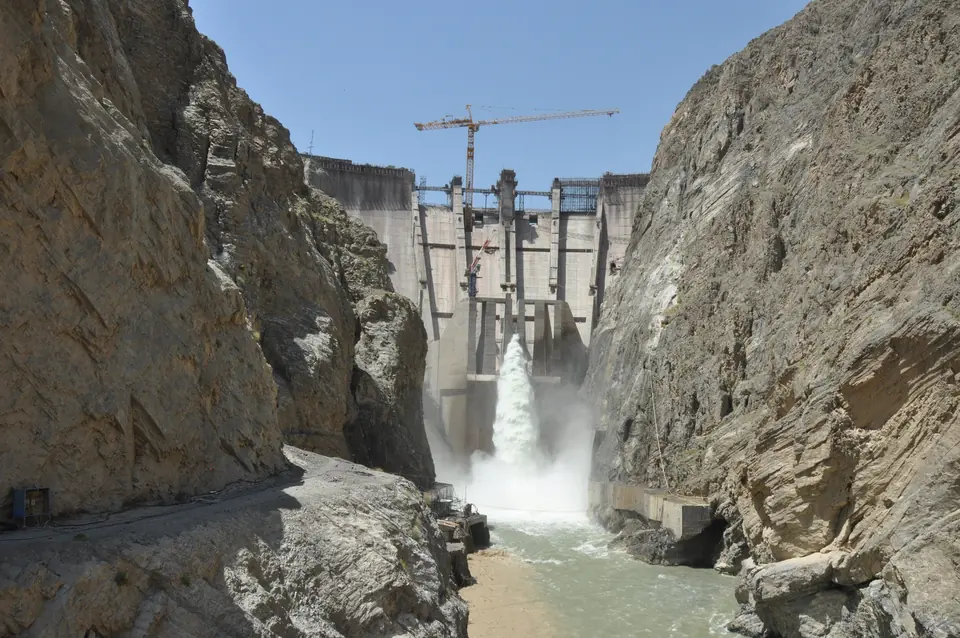
The act was a deliberate attempt to rebalance the relationship toward the Pakistani public - the largest civilian commitment Washington had made to Pakistan. It funded power plants, dams, scholarships and health programmes. But it also showed how sensitive Pakistanis had become to anything that looked like American dictation.
Delivery
Disbursement fell far short of the headline. Projects were slowed by security conditions, by the difficulty of channelling money through Pakistani institutions, and by the collapse of trust in 2011. Analyses by the Center for Global Development and reporting by Dawn found that only a little over half of the authorised amount - figures of roughly $3–5 billion are cited depending on how off-budget spending is counted - had actually been spent by the end of the authorisation period4,5.
Legacy
Authorisation lapsed in 2014 and was not renewed at the same level. Kerry–Lugar–Berman remains a reference point in both countries: for Americans, of a well-intentioned effort to invest in Pakistan's people; for many Pakistanis, of promises larger than delivery.
Sources
- Public Law 111-73: Enhanced Partnership with Pakistan Act of 2009, US Government Publishing Office (govinfo), 15 October 2009 · Primary document
- U.S. Aid to Pakistan: The Kerry-Lugar Bill, PBS Frontline/World, 2009 · Press
- Pakistan’s top military commanders express “serious concern” over US aid bill, Voice of America, 7 October 2009 · Press
- The (unspent) money trail, Dawn, 2015 · Press
- More Money, More Problems: A 2012 Assessment of the US Approach to Development in Pakistan, Center for Global Development, 2012 · Scholarly
- US Congress statement to alleviate Pakistani concerns, Radio Free Europe/Radio Liberty, 14 October 2009 · Press
- Obama signs Kerry-Lugar bill into law, Dawn, 16 October 2009 · Press
Next in The Long ArcThe Strategic Dialogue goes ministerial