DiplomacyThe post-9/11 partnership
The Strategic Dialogue goes ministerial
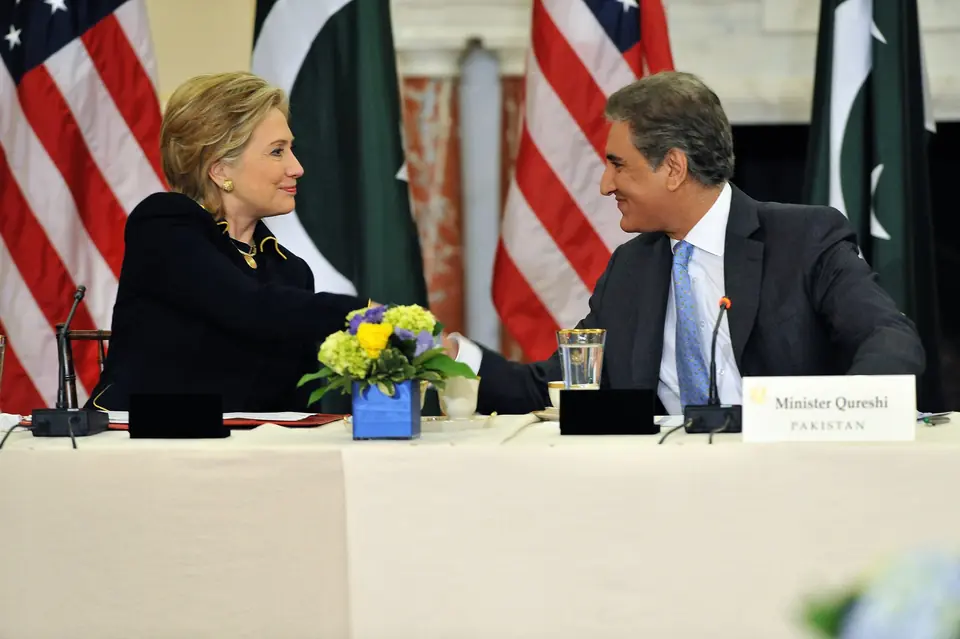
In March 2010 Hillary Clinton and Shah Mehmood Qureshi opened the first ministerial-level round of the US–Pakistan Strategic Dialogue, with army chiefs and economic ministers at the table.
1 min read
Background
A US–Pakistan strategic dialogue had been launched at a lower level in 2006, but it had met only intermittently. The Obama administration, which wanted to build a broader relationship with Pakistan's civilian government alongside the security partnership, agreed to raise it to the level of foreign ministers.
What happened
Clinton opened the talks at the State Department on 24 March 2010, describing them as the start of a new day in the partnership1. The meeting was co-chaired by Clinton and Foreign Minister Shah Mehmood Qureshi. The American side included Defence Secretary Robert Gates and the Chairman of the Joint Chiefs of Staff, Admiral Mike Mullen; the Pakistani delegation included the army chief, General Ashfaq Parvez Kayani, as well as defence, finance and agriculture officials1,2. Pakistan presented a long list of requests, from energy projects to military equipment and market access. The discussions covered economic development, water and energy, education, communications and public diplomacy, agriculture and security, and the two sides agreed to establish sectoral working groups to carry the dialogue forward1,3.
Why it mattered
For Pakistan, the dialogue offered the respectful, comprehensive relationship that its leaders had long said they wanted - one not limited to Afghanistan. For Washington, it was a vehicle for the civilian commitments of the Kerry–Lugar–Berman act. A second ministerial round was held in Islamabad in July 2010 and a third in Washington in October 2010.
Legacy
The dialogue was suspended amid the crises of 2011 and revived in 2013–14 under the Sharif government. Its working-group structure - energy, economics and finance, security and strategic stability, counter-terrorism, education and science - set the template for later rounds and for the "comprehensive" agenda both governments have described since.
Sources
- US, Pakistan open strategic dialogue (VOA), GlobalSecurity.org, 24 March 2010 · Press
- US-Pakistan talks aim to end years of mutual skepticism, Radio Free Europe/Radio Liberty, March 2010 · Press
- State Department briefing on the Strategic Dialogue (24 March 2010), GlobalSecurity.org (US State Department), 24 March 2010 · Official
Next in The Long ArcThe superflood of 2010 and the American airlift